What are kidney stones?
Kidney stones are hard deposits of minerals and salts that form inside the kidneys. Small stones may pass unnoticed. Larger stones can move into the ureter — the tube from the kidney to the bladder — and block urine flow, causing intense pain.
Symptoms
- Severe pain in the side or back, below the ribs, often coming in waves
- Pain spreading to the lower abdomen or groin
- Blood in the urine — pink, red or brown
- Nausea and vomiting
- Frequent or painful urination
- Fever and chills if there is infection
Diagnosis
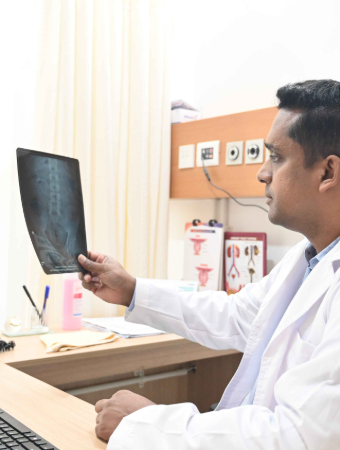
The urologist may request a urine test, blood tests and imaging. CT scan is very accurate for finding stones; ultrasound is also used. Smita Memorial Hospital has a Philips Incisive 128-slice CT scanner and ultrasound in its Radiology department.
Treatment options
Treatment depends on the size, location and type of stone, and whether there is infection or blockage.
- Watchful waiting with fluids and pain relief for small stones likely to pass
- ESWL (extracorporeal shock wave lithotripsy) — shock waves from outside the body break the stone into small pieces that pass in the urine
- URS (ureterorenoscopy) — a thin scope passed through the urinary passage to reach and break or remove the stone, with no external cut
- PCNL (percutaneous nephrolithotomy) — for large kidney stones, through a small opening in the back
- Cystolithotripsy — breaking stones in the bladder
- Laparoscopic or open surgery in selected cases
Smita Memorial Hospital's Urology Department has a direct lithotripter for ESWL of kidney and ureteric stones, and performs URS, PCNL, cystolithotripsy, and advanced laparoscopic and open urological operations.
Preventing stones from coming back
- Drink enough water through the day so urine is pale
- Limit excess salt
- Follow dietary advice based on your stone type
- Take prescribed medicines if advised
- Attend follow-up scans
Types of kidney stones
- Calcium stones — the most common type
- Uric acid stones — more likely with gout or a high-purine diet
- Infection-related stones — can grow large
- Other less common types linked to inherited conditions
If you pass a stone, keep it for analysis. Knowing the stone type helps doctors give specific prevention advice.
What happens during ESWL
ESWL is usually done without any cut. You lie on a treatment table, and the machine focuses shock waves on the stone using X-ray or ultrasound guidance. The stone breaks into small fragments that pass in the urine over the following days or weeks. Some people notice blood in the urine and mild discomfort as fragments pass. Drinking plenty of water helps. Follow-up imaging checks that the stone has cleared.
Stents after stone treatment
After URS or PCNL, a thin temporary tube called a DJ stent may be placed between the kidney and bladder to help urine drain while swelling settles. It can cause some urinary frequency or discomfort. The stent must be removed or changed at the time advised — a forgotten stent can cause serious problems. Keep a written note of the date.
When stones affect the kidneys long-term
Repeated stones or long-standing blockage can affect kidney function. People with recurrent stones may be evaluated by both urology and nephrology. Smita Memorial Hospital's Nephrology Department offers comprehensive evaluation for kidney stones and urinary tract complications, and uroflowmetry is available to assess urinary flow.
Specialists you can consult
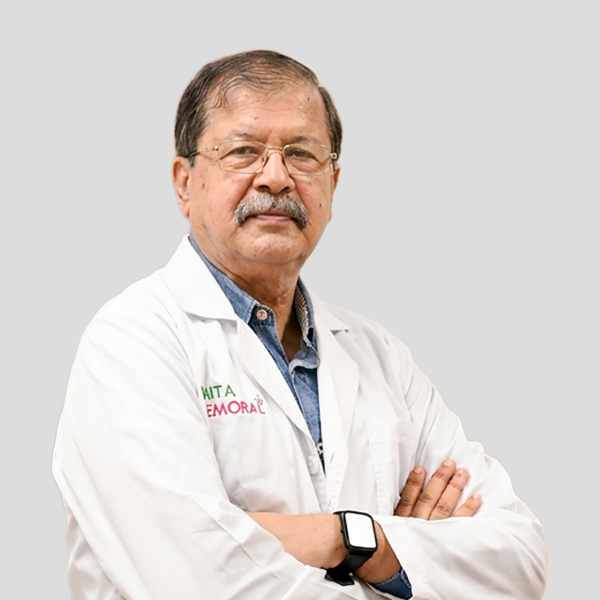
Dr. Kim Jacob Mammen
MBBS, MS, MCh. (Urol), DNB (Urol), FRCS (Urol) FRCS (Glasgow), FACS, MNAMS (Urol), FICS, FICA
Frequently asked questions
Can kidney stones be treated without surgery?
Many stones pass on their own, and ESWL breaks stones without any incision. Larger stones may need URS or PCNL.
Is ESWL available in Thodupuzha?
Yes. Smita Memorial Hospital's Urology Department has a direct lithotripter for ESWL.
Will kidney stones come back?
Stones can recur. Adequate water intake and diet advice reduce the risk.
When is kidney stone pain an emergency?
When there is fever, inability to pass urine, a single kidney, or pain and vomiting that cannot be controlled.
Sources
- Urology, smitahospital.com
- Urology Services, smitahospital.com
- Radiology, smitahospital.com